


A game between a child and a grown-up tends to end one of two ways. The grown-up wins, which is no fun for the child. Or the grown-up lets the child win, which stops being fun the moment the child notices.
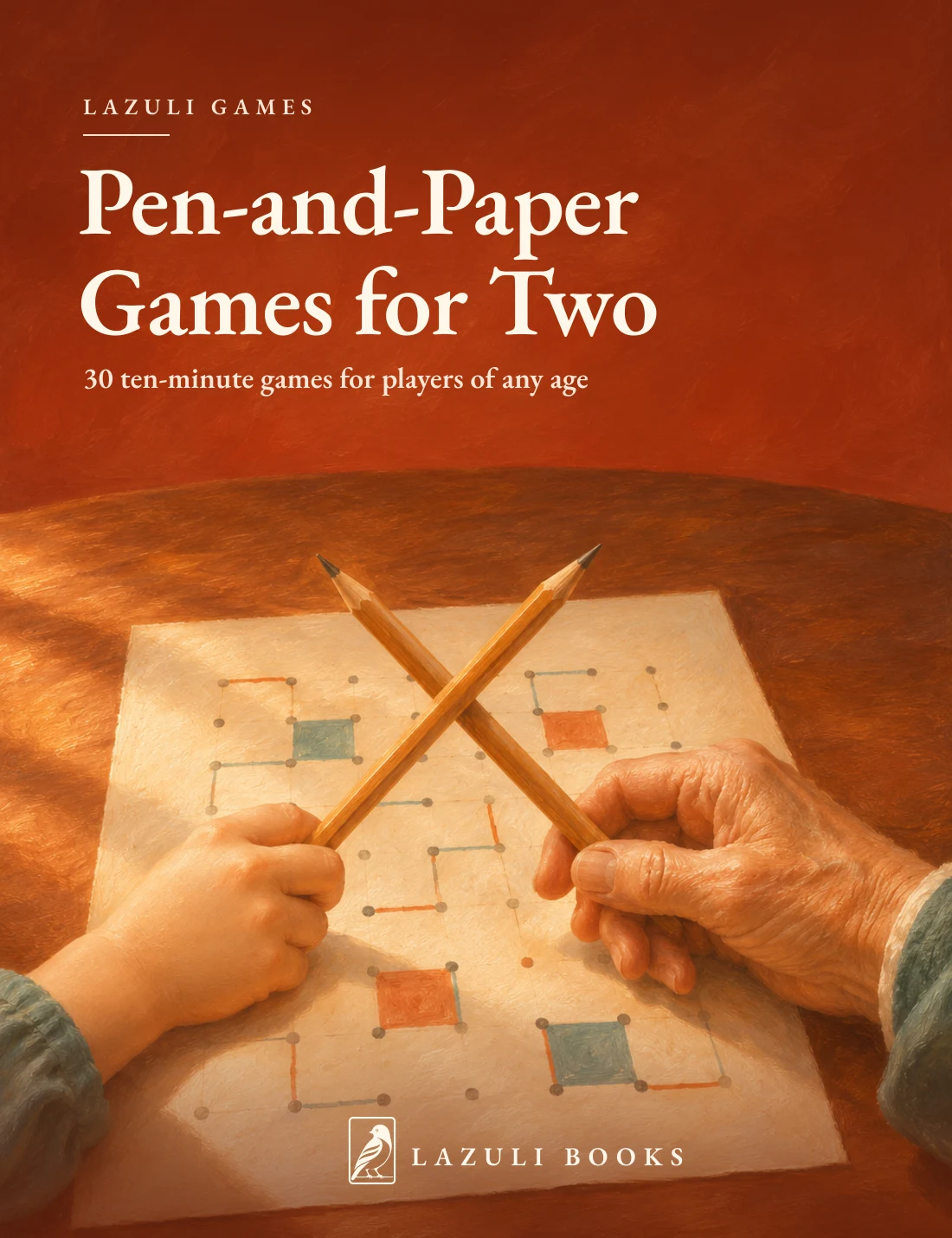
Pen-and-Paper Games for Two is built to avoid both. Every one of its 30 games has a handicap rule, so a younger player can beat an older one fairly, and nobody has to go easy.
What a handicap does
A handicap is an old idea. Golfers use one so that players of different skill can compete over the same round, and chess players sometimes give odds by starting without a piece. The point is the same each time. You even out the difference before the game starts, and then both players play as hard as they like.
That matters more than it sounds. When a grown-up plays softly, the child has to wonder whether the win was real. When the rules carry the difference instead, the win is real. The child knows it, and so does the grown-up who lost.
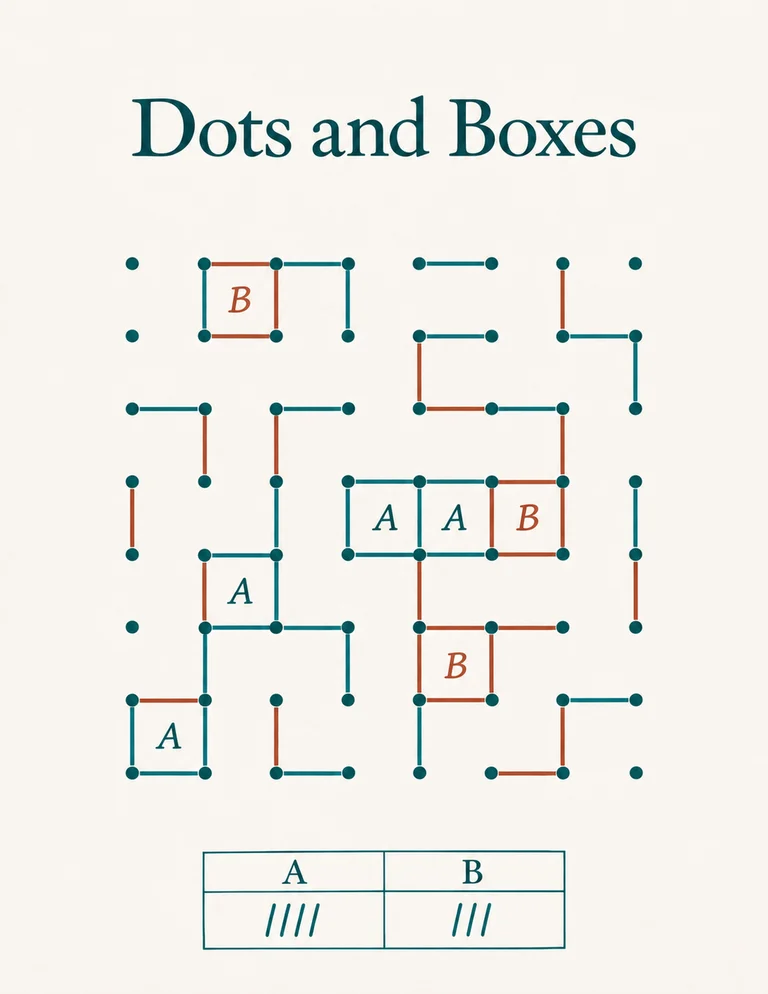
Part of every game
The handicap isn’t tucked away in a chapter at the back. It’s part of each game’s rules, which are short enough to read out before you begin. You settle it at the start, the same way you settle who goes first.
The games use words, codes, memory and drawing, so what makes one player stronger changes from game to game. A rule that evens out a word game won’t do much for a memory game. That’s why each game has its own.
Played to the end
A game can look fair on paper and still tip one way after a few rounds. Playing it is the only way to find out, so real pairs play every game through to the end before it goes in the book.
Each game fits on one spread and takes about ten minutes. You need the book and one pencil each. It’s written for two players aged 8 and up, and the top of that range is open.
The free sample has two of the games to print at home. Our request form is still a preview, so it can’t send them yet.